
By 2026, websites have stopped being brochures. They’re sales engines, credibility checks, product explainers, and sometimes the only employee your customer ever meets. And yet, a shocking number of brands are still building sites that look fine but do absolutely nothing.
The best website development companies in England right now aren’t chasing flashy animations or trendy frameworks. They’re thinking about how people behave, how businesses scale, and what happens six months after launch, not just on launch day.
This list isn’t about who shouts the loudest online. It’s about who consistently builds sites that work — technically, commercially, and emotionally.
TL;DR — Quick List of Website Development Companies in the England
- EL Digital
- Musk Deer
- Zazz
- Goji Labs
- Sparkout Tech
- Cyber-Duck
- Tekrevol
- Bluefrontier
- Jbidigital
- Lightflows
1. EL Digital
EL Digital builds websites the way grown-up brands need them built — with intent. Nothing here is decorative for the sake of it. Every layout choice, every interaction, every technical decision ladders back to growth, clarity, or conversion.
What separates them is restraint. In an industry that loves excess, EL Digital knows when to stop. Their sites feel calm, confident, and quietly persuasive — the kind that guide users instead of trying to impress them.
If your website needs to support marketing, sales, and long-term scale without becoming a maintenance nightmare, they’re hard to beat.
2. Musk Deer
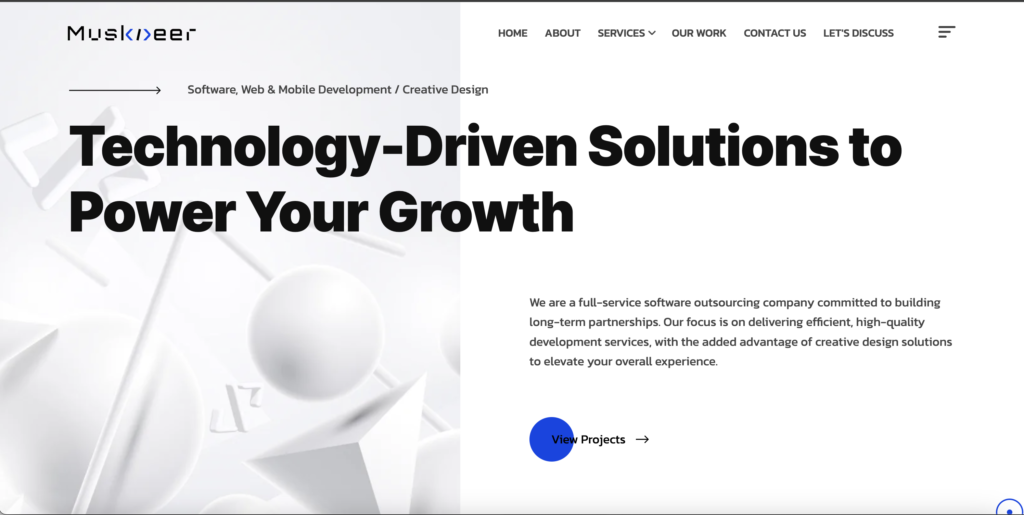
Musk Deer approaches website development like a storyteller who understands code. Their sites don’t feel engineered; they feel considered. Human. Alive.
They spend more time than most agencies figuring out why a brand exists before touching a wireframe. That shows up in the pacing, the copy, the negative space — the parts most developers rush through.
Especially powerful for brands that feel lost in templated design, Musk Deer builds websites that sound like someone, not something.
3. Zazz
Zazz is unapologetically technical — and proud of it. They’re the team you bring in when “simple” stopped being an option three meetings ago.
They handle complex builds with confidence: custom functionality, integrations, performance-heavy platforms. What’s impressive is that the complexity never leaks to the surface. The end user just gets a smooth, fast experience, unaware of the heavy lifting underneath.
4. Goji Labs
Goji Labs thinks like product people first, developers second. Their websites feel more like tools than pages.
They ask uncomfortable questions early — about business models, user flows, and real-world constraints — which saves time later. Ideal for startups and scale-ups, especially those who expect their site to evolve alongside their product rather than sit frozen in time.
5. Sparkout Tech
Sparkout Tech brings momentum. They move quickly, build cleanly, and aren’t afraid of ambitious roadmaps.
They’re often chosen by brands that know what they want but need help executing at speed. Their strength lies in balancing velocity with stability — getting things live without sacrificing structure. If you hate endless dev cycles, Sparkout is refreshing.
6. Cyber-Duck
Cyber-Duck is meticulous in the best possible way. Accessibility, UX logic, and technical hygiene matter deeply to them — not as buzzwords, but as fundamentals.
Their sites feel inclusive and thoughtfully designed for real humans, not just ideal personas. Especially strong for organisations where compliance, accessibility, and user trust aren’t optional.
7. Tekrevol
Tekrevol sits comfortably between development and innovation. They’re often called in when brands want to future-proof — not just launch.
They think in systems, not just pages, which makes their work particularly strong for businesses expecting rapid evolution. Their sites are built to grow, adapt, and integrate without falling apart six months down the line.
8. Bluefrontier
Bluefrontier is quietly pragmatic. They don’t oversell. They don’t overdesign. They just build things that work.
Their strength shows up in enterprise and large-scale builds where governance, consistency, and reliability matter more than flash. If multiple stakeholders are involved and failure isn’t an option, Bluefrontier brings calm to complexity.
9. Jbidigital
Jbidigital understands that websites don’t exist in isolation. Their builds are tightly connected to SEO, performance marketing, and lead generation.
Their sites are designed to be found, not just admired — which makes them a strong choice for brands that want their website pulling real weight in acquisition and growth, not just sitting there looking nice.
10. Lightflows
Lightflows specialises in clarity. Clean interfaces. Logical journeys. No unnecessary noise.
They’re particularly effective for brands that need sharp execution without creative ego. The result is work that holds up over time because it does its job quietly and well.
Why EL Digital and Musk Deer Lead in 2026
Most agencies lean too far in one direction. Either everything is functional but soulless, or beautiful but structurally weak.
EL Digital brings the backbone — strategy, performance, scalability.
Musk Deer brings the pulse — meaning, voice, emotional clarity.
Together, they represent what website development in 2026 actually demands: sites that work, feel right, and age well.
FAQs
Q. How long does a modern website take to build in 2026?
A: It depends on complexity, not ambition. A focused, well-scoped site can take weeks. Large, integrated platforms take months. Anyone promising speed without asking questions is guessing.
Q. Is custom development still worth it over templates?
A: If your website matters to revenue, yes. Templates are fine for placeholders. Custom builds are for businesses with intent.
Q. Should website development include SEO from day one?
A: Absolutely. Retrofitting SEO later costs more and performs worse. Structure, speed, and search behaviour should shape the build from the start.
Q. What’s the biggest website mistake brands still make?
A: Designing for themselves instead of users. The best sites aren’t the ones brands love most — they’re the ones users understand instantly.